
How to decide whether your puppy needs a 3 a.m. potty trip
There's no safe universal rule for how many hours a puppy can hold it overnight. Their age, a recent accident, a change in routine, health, crate comfort and what actually happened on recent nights matter more than a promise that they "should" make it to morning.
What to do tonight
Let the last few nights decide.
- Write down bedtime, the last outdoor toilet, any wake-ups and any accident.
- If your puppy has been dry and sleeping comfortably, let them sleep.
- If they've been waking or soiling, set an alarm a little before their usual time.
- Keep any trip boring and brief: straight out, calm praise, straight back to bed.
Dry and sleeping comfortably?
Your puppy's recent nights answer this better than any age chart.
- If the nights are dry and the morning toilet is prompt
Let them sleep, and reassess
- Don't wake a dry puppy to follow a generic 3 a.m. rule.
- Look again as the pattern changes.
- If they're waking, soiling or showing an early need
Plan one quiet trip
- Set an alarm before their usual need-point.
- Straight to the familiar spot, with a quiet chance to go.
- Calm praise, then straight back to bed.
- No result? Back to bed calmly, with no extra freedom.
Step 1
Track what happens for a few nights
Write down bedtime, the last successful outdoor toilet, wake-ups, any overnight accident, the morning toilet, food and water changes, and anything unusual such as restlessness or a sudden need to go. If your puppy has been waking, soiling or showing a consistent early-morning need, an alarm set before that usual point can prevent another accident while you gather a new pattern.
If your puppy has been dry, sleeping comfortably and toileting promptly in the morning, don't wake them just to follow a generic 3 a.m. rule. Reassess as the pattern changes, instead of stretching the night to prove a point.
Step 2
If you take your puppy out overnight
Keep it boring and brief. Carry or lead your puppy straight to the familiar toilet spot, give them a quiet chance to go, offer calm praise when they do, and return straight to bed. No play, bright conversation, training session or long walk. The goal is a toilet break. It shouldn't become a new nighttime routine.
If they don't go, return to bed calmly. Don't keep them outside until they're upset, and don't turn a no-result trip into freedom around the house. Tie the next decision to the record you're building.
Step 3
Keep the sleeping area safe
Make sure the sleep space is somewhere your puppy has learned to rest comfortably, is sized and arranged safely, and isn't being used to force a hold beyond what they can manage. Clean any accident without scolding. Punishment after an accident can't tell a puppy what happened hours earlier, and it can make toileting less clear.
This guide is about deciding whether to offer a preventive overnight break. If your puppy has already soiled the crate, clean and reset the space first, then use the next few nights of notes to choose a gentler schedule. It isn't defiance.
In the app
Get the full plan in Pawly.
In Pawly, potty becomes one plan for your puppy, with a step for tonight and check-ins as you go.
Pawly is in beta on iPhone.
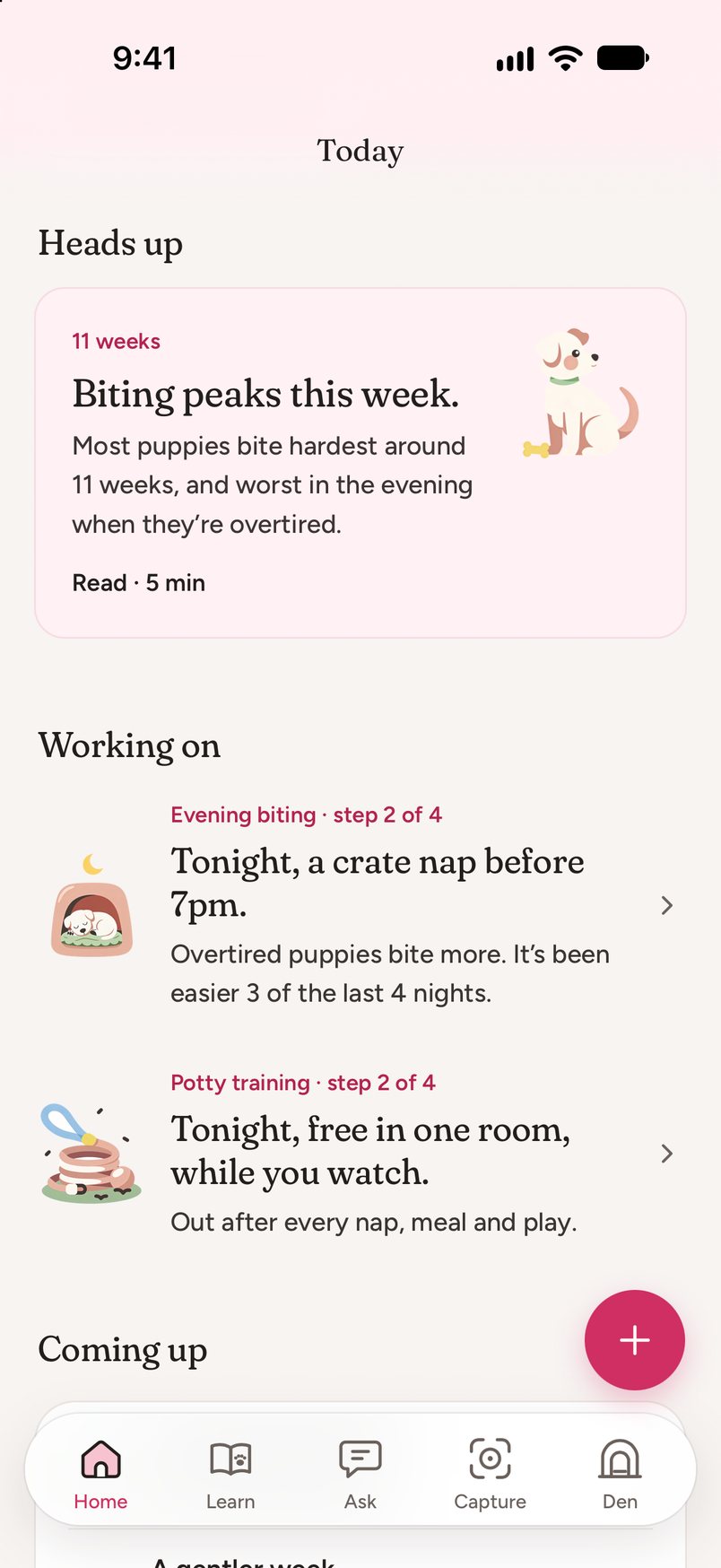
Plans on Pawly's Today screen.
Written from Pawly's research library. Safety lines are checked against published veterinary references. This guide isn't a diagnosis or a substitute for your vet.